The Complete Keyword Research Guide for 2026
Put this guide into practice with our free companion browser tools.
100% free, client-side private, and zero sign-up required. Run keyword clustering, schema generation, or SERP previews in seconds.
Why Keyword Research Matters
Keyword research is the foundation of SEO. It's not just about finding keywords—it's about understanding what your customers are searching for and why.
The 3 Types of Keywords
1. Informational Keywords
- People want to learn something
- Examples: "how to rank on Google", "what is SEO"
- High volume, lower commercial intent
- Good for building authority
2. Commercial Keywords
- People considering a purchase
- Examples: "best SEO tool", "cheapest hosting"
- Medium volume, high intent
- Good for product pages
3. Transactional Keywords
- People ready to buy
- Examples: "buy keyword research tool", "SEO service pricing"
- Lower volume, highest conversion intent
- Most valuable
How to Find Profitable Keywords
- Start with your audience pain points
- What problems do they have?
- What questions do they ask?
- What solutions are they searching for?
- Use search volume + difficulty balance
- High volume + low difficulty = sweet spot
- Start with long-tail keywords (3-4 words)
- These have less competition
- Analyze your competitors
- What keywords are they ranking for?
- Which keywords do they own vs. you?
- Find keyword gaps you can exploit
- Look for question-based keywords
- People search questions daily
- Example: "how to rank on Google faster"
- Use in FAQ sections and blogs
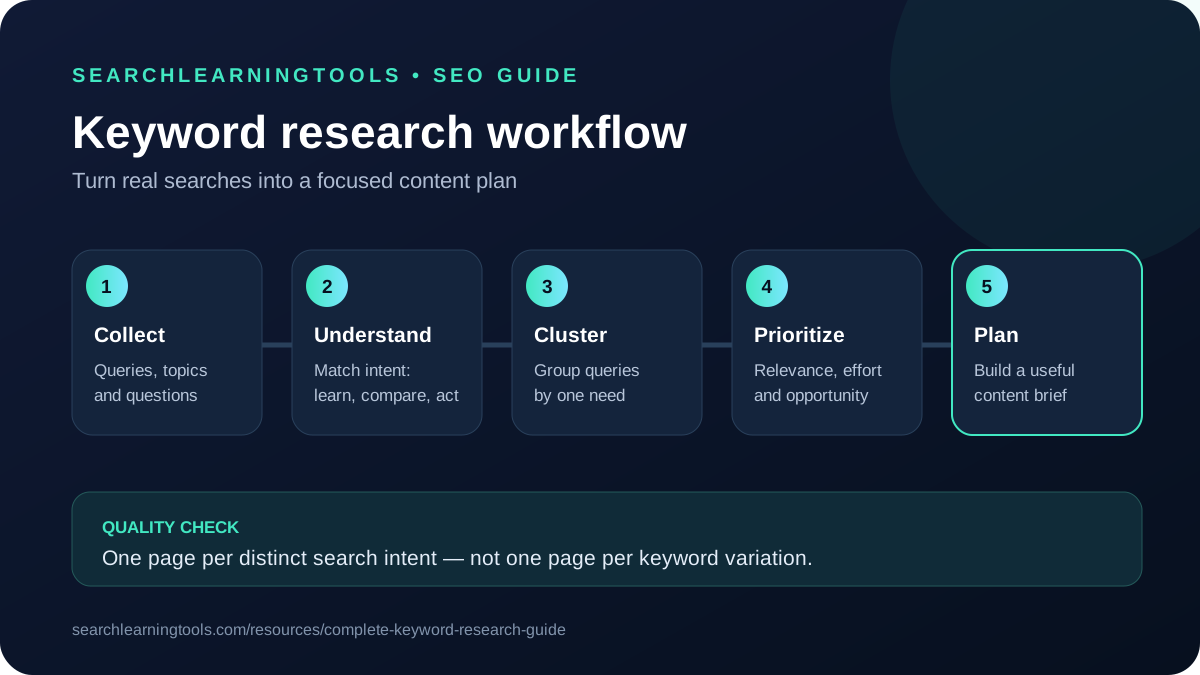
The Keyword Research Process (Step-by-Step)
Step 1: Seed Keywords Start with 10-20 seed keywords relevant to your niche. These are broad keywords you want to own.
Step 2: Expand the List Use our AI Keyword Generator to generate a small set of topic-based ideas for review. Include:
- Long-tail variations (4+ words)
- Synonyms and related terms
- Question formats
Step 3: Assess Opportunity For each keyword, evaluate:
- Search volume (higher is better)
- Keyword difficulty (lower is easier to rank)
- Commercial intent (matches your business)
Step 4: Cluster Similar Keywords Group keywords that target the same search intent. This lets you create ONE piece of content targeting multiple keywords.
Step 5: Create Content Write comprehensive content targeting 10-15 related keywords. Use our Content Optimizer to ensure you cover everything.
Pro Tip: The Long-Tail Keyword Gold Mine
Long-tail keywords (3-5+ words) are often overlooked but incredibly valuable:
- Lower competition (easier to rank)
- Higher commercial intent (people know what they want)
- Lower cost (PPC campaigns are cheaper)
- Higher conversion rates
Example: "best SEO tool for small business" is better than "SEO tool"
Common Keyword Research Mistakes
❌ Ignoring search intent
- Don't target commercial keywords on informational content
- Match keyword intent to page type
❌ Chasing high-volume keywords only
- Low-hanging fruit is in medium-volume keywords
- Focus on keyword difficulty, not just volume
❌ Not checking SERP
- Always look at actual results for your keyword
- If results are dominance by huge brands, skip it
- Find underserved niches
❌ Forgetting about seasonality
- Some keywords spike in certain seasons
- Plan content calendar around this
What's Next?
Use our AI Keyword Generator to explore topic-based ideas, then use Keyword Clustering to organize your reviewed keywords into content pillars.
Related Free Tools
AI Keyword Generator
Generate topic-based keyword ideas and starter search intent classifications for content planning and search engine optimization.
Keyword Clustering Tool
Local SEO topical map generator free: group related long-tail keywords by semantic search intent to build comprehensive topical authority content pillars for your site.
Found this helpful? Share it:
Share on TwitterTurn the lesson into a workflow
The free guide explains the reasoning. The one-time AI SEO Prompt System packages repeatable prompts for the next research, briefing, and optimization pass.
See the AI SEO Prompt SystemQuestions About SEO Tools?
Yes, the core SEO tools are free. The optional AI SEO Prompt System adds structured workflows for a one-time $7.99.
Community Q&A
Questions and answers for this guide
Maya
9/12/2026
The keyword clustering prompts are clear, and the workflow helps me explain the why behind each content brief.
Leo
9/14/2026
I used the AI visibility checklist before publishing a guide and it caught a few gaps around direct-answer structure and heading clarity.