The Ultimate On-Page SEO Checklist
Put this guide into practice with our free companion browser tools.
100% free, client-side private, and zero sign-up required. Run keyword clustering, schema generation, or SERP previews in seconds.
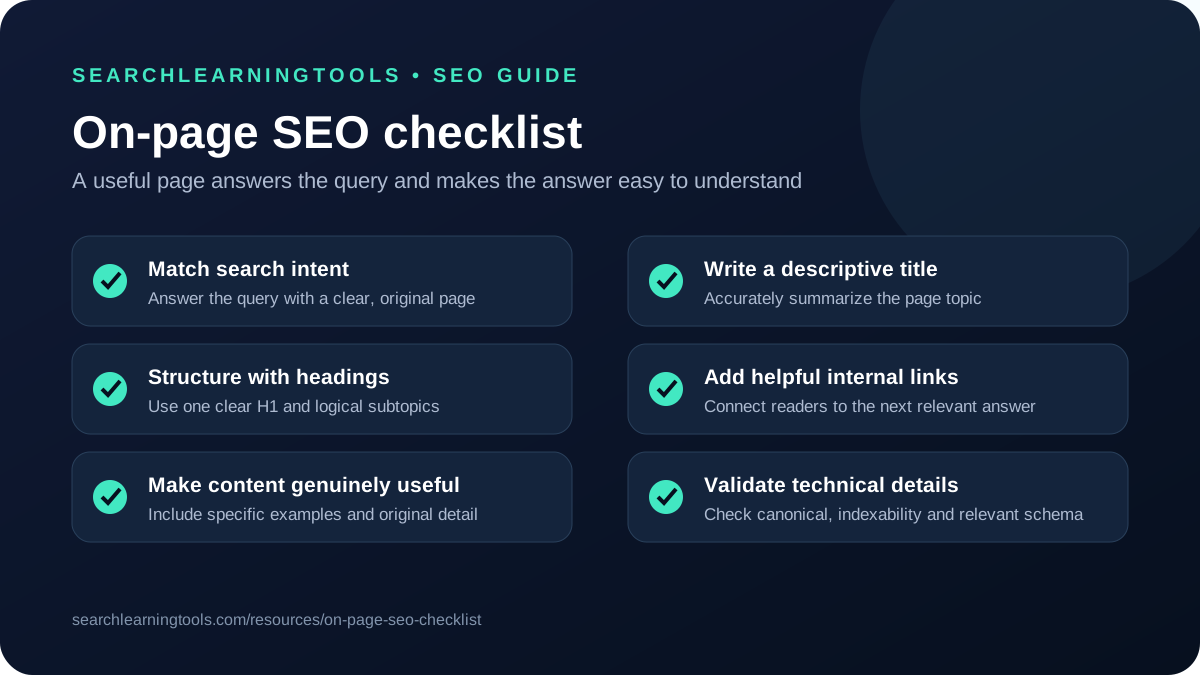
Complete On-Page SEO Checklist
On-page SEO is everything you control on your website. Master these elements and you'll rank higher.
Title Tags (Meta Titles)
✅ Requirements:
- 50-60 characters (displays fully in Google)
- Include primary keyword naturally
- Include brand name
- Make it compelling (drive clicks)
✅ Best Practices:
- Put keyword near the beginning
- Use power words (ultimate, complete, best)
- Test different variations
❌ Avoid:
- Keyword stuffing
- Generic titles
- Too long (gets truncated)
Meta Descriptions
✅ Requirements:
- 155-160 characters
- Include primary keyword
- Include call-to-action
- Accurately describe content
✅ Pro Tips:
- Use active voice
- Include numbers when possible
- Use emotional triggers
- Add urgency when relevant
H1 Tags
✅ Best Practices:
- ONE H1 per page
- Include primary keyword
- Should be compelling headline
- Describes page content
H2/H3 Structure
✅ Best Practices:
- Use H2 for main sections
- Use H3 for subsections
- Include secondary keywords naturally
- Create logical hierarchy
Content Quality
✅ Length:
- 1,500+ words for competitive keywords
- 800+ words for long-tail keywords
- Quality > Quantity always
✅ Structure:
- Short paragraphs (2-3 sentences max)
- Short sentences (15-20 words)
- Bullet points for lists
- Bold/italic for emphasis
✅ Topics to Cover:
- What problem does this solve?
- Why should they care?
- How to implement the solution
- Real examples and case studies
- Common mistakes to avoid
- Next steps/CTA
Images & Alt Text
✅ Image Optimization:
- Compress images (< 100KB ideally)
- Use descriptive filenames
- Add descriptive alt text (125+ characters)
- Use WebP format when possible
✅ Alt Text Example:
- ❌ Bad: "image1.jpg"
- ❌ Bad: "how to rank on Google"
- ✅ Good: "keyword research spreadsheet showing search volume and difficulty scores"
Internal Links
✅ Best Practices:
- Link to relevant internal pages
- Use descriptive anchor text
- 3-5 internal links per article
- Link to both content and products
✅ Link Strategy:
- Pillar pages link to clusters
- Cluster pages link to pillar
- Create topical authority
Schema Markup
✅ Essential Schema Types:
- Article schema (all blog posts)
- FAQ schema (FAQ sections)
- Product schema (product pages)
- Organization schema (homepage)
✅ Use Our Tool: Generate structured data with our Local SEO schema generator and Free SEO workflow tools to win Google rich snippets.
How to Measure On-Page SEO Without Paid Tools
You do not need expensive monthly software suites to audit and measure on-page search performance. You can accurately measure optimization health using free developer SEO tools and official search utilities:
- Google Search Console Performance: Track organic impressions, clicks, click-through rate (CTR), and average query position directly from Google.
- Rich Results Testing: Inspect structured JSON-LD syntax using Google's Schema Validator to ensure zero parsing errors.
- SERP Snippet Bounds: Check desktop (600px / ~60 chars) and mobile title and meta description truncation using our free SERP preview tool.
- Crawl & AI Bot Access: Verify whether Googlebot, GPTBot, and PerplexityBot are allowed in your robots.txt file to safeguard AI answer engine citations.
- Dynamic App Router Metadata: Inspect rendered HTML head tags to ensure Next.js SEO metadata renders self-referencing canonicals and OpenGraph 1200x630 social cards.
Core Web Vitals
✅ Targets:
- LCP (Largest Contentful Paint): < 2.5 seconds
- CLS (Cumulative Layout Shift): < 0.1
- FID (First Input Delay): < 100ms
✅ How to Improve:
- Optimize images
- Reduce JavaScript
- Use CDN for static content
- Implement lazy loading
Mobile Optimization
✅ Checklist:
- Responsive design (all screen sizes)
- Touch-friendly buttons (44x44px minimum)
- Mobile-readable text (16px minimum)
- Fast load time on mobile
Before Publishing Checklist
- [ ] Title tag optimized (50-60 chars, includes keyword)
- [ ] Meta description written (155-160 chars, includes CTA)
- [ ] H1 tag added (keyword included, compelling)
- [ ] Content is 1500+ words for competitive keywords
- [ ] Internal links added (3-5 relevant pages)
- [ ] Images compressed and alt text added
- [ ] Schema markup added (article, FAQ, etc.)
- [ ] Mobile preview checked
- [ ] Link to relevant tool or product
- [ ] Grammar/spelling proofread
Tools to Use
- Meta Description Generator - Write compelling descriptions
- Schema Generator - Create JSON-LD markup
- Content Optimizer - Get specific recommendations
Ready to optimize? Start with our tools above.
Related Free Tools
Meta Description Generator
Next.js SEO metadata & meta description generator: craft high-CTR meta tags optimized for search engine snippet bounds and user intent.
Schema Markup Generator
Online schema generator and Google schema creator: create structured Article and LocalBusiness JSON-LD schema markup code starters to earn Google rich snippets.
Found this helpful? Share it:
Share on TwitterTurn the lesson into a workflow
The free guide explains the reasoning. The one-time AI SEO Prompt System packages repeatable prompts for the next research, briefing, and optimization pass.
See the AI SEO Prompt SystemQuestions About SEO Tools?
Yes, the core SEO tools are free. The optional AI SEO Prompt System adds structured workflows for a one-time $7.99.
Community Q&A
Questions and answers for this guide
Maya
9/12/2026
The keyword clustering prompts are clear, and the workflow helps me explain the why behind each content brief.
Leo
9/14/2026
I used the AI visibility checklist before publishing a guide and it caught a few gaps around direct-answer structure and heading clarity.